
Accipiter and Axis Provide Port of Windsor with Enhanced Surveillance
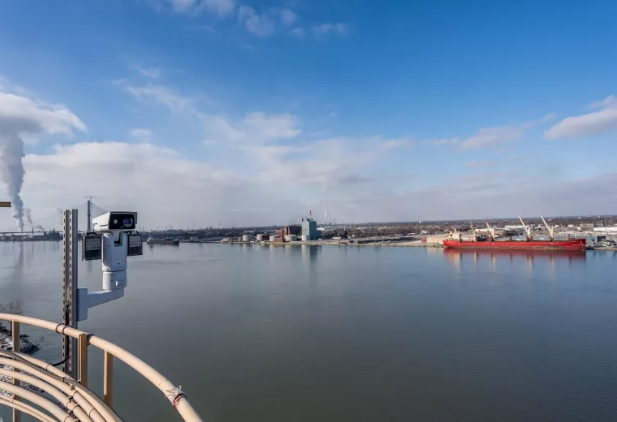
Transportation Smart Vessel Tracking Leads to Safer River Traffic Organization: Windsor Port AuthorityLocation: Windsor, Ontario, CanadaCustomer need: Perimeter and area security, Property and asset protection, Public safetyWindsor, Ontario, Canada, 2025 Windsor Port Authority uses Axis bispectral cameras and Accipiter radars to monitor river traffic along the U.S.-Canada border. They also help the Harbor Master prevent vessel collisions and detect smugglers crossing the shipping lane. Managing traffic on a busy international waterway The Windsor Port is located on the Detroit River, a waterway bordering the United States and Canada. Because it serves as the passageway between Lake Huron and Lake Erie, there could be 6,000 to 9,000 cargo vessels navigating the channel annually. In addition to commercial ships passing by or coming into port, over 10,000 small fishing boats and pleasure crafts weave their way through the congested waters. “If I don’t have detailed knowledge of the traffic going through these waters, we could have some horrific accidents,” shares Peter Berry, Harbor Master and Vice President of Operations for the Windsor Port Authority. For years, Berry relied solely on radar coverage to help him monitor river activity. The marine domain awareness platform from Accipiter Radar Technologies allowed him to identify commercial vessels, small craft, even jet skiers and debris in the water. “All of these objects show up as color-coded icons on my computer screen,” explains Berry. But the one thing lacking in the solution was the ability to see any visual details of those objects. To address that limitation, Accipiter integrated Axis bispectral cameras into the platform. The dual-sensor cameras provide 360-degree surveillance with both thermal detection and visual verification. “Now when radar identifies a target, the Axis cameras visually confirm that target for me,” says Berry. Berry asserts that the cameras provide such clarity that he can clearly read a license plate across the river which is almost a mile away. “Even in lowlight I can tell police that the camera saw four people onboard,” shares Berry. “If you’re going to intercept it, that’s valuable information to know.” Automatically steering cameras to targeted vessels “Accipiter is programmed to track the longitude and latitude of every vessel in the waterway,” explains Tim Nohara, President and CEO of Accipiter Radar Technologies. “It uses those coordinates to grab the appropriate camera and automatically steer it to a target without any human intervention. The software controls the camera’s pan/tilt/zoom and can even direct it to follow the vessel as it moves through the channel.” If the Harbor Master wants to look closer at a certain area, he always has the option to click on the map or a radar target icon on his integrated radar display and redirect the nearest camera to that location for closer inspection. Alone, the coastal surveillance platform provides wide-area, real-time detection and tracking coupled with on-the-fly and interactive analytics applied to historic target data. Augmenting the solution with Axis cameras adds a visual layer of awareness that further helps the Harbor Master make timely, informed decisions about his domain. Broadcasting warning about obstruction in channel One cold wintry day in December, the U.S. Coast Guard notified Berry that they’d spotted a boat stopped in the middle of the river. The grain carrier had caught fire, dropped anchor, and was dead in the water. “When I looked at the camera view on my computer, I saw that Accipiter had already pointed the camera at the vessel,” reports Peter Berry. “You couldn’t tell from the outside that it was on fire. But because the Axis cameras have a thermal aspect, I could see the heat signature of the fire and that it was contained in the ship’s engine room.” Berry continued to monitor the flaring heat onboard the ship but also sent out a navigational warning to other vessels on the river, including the boat’s exact longitude and latitude as recorded by the Accipiter radar display. While the darkness of the hour prevented them from seeing anything from shore, the technology also provided thermal visuals to monitor activity on the bridge and deck. Thankfully everyone was safely evacuated. “Without these two technologies, we would have been blind,” claims Berry. Monitoring high risk construction projects The Harbor Master also serves as the general contractor for any construction projects at the port. “During construction of the new Gordie Howe Bridge we were concerned about material or construction workers falling into the river,” shares Berry. “I used the Axis cameras and integrated radars extensively to manage traffic passing underneath the bridge. It helped me ensure vessels navigated safely through the construction area.” Managing a busy port along an international border can be quite challenging. Axis cameras and Accipiter radars give us the vital domain awareness we need to prevent collisions on our waterway, detect illegal activity, and save lives. Peter Berry, Harbor Master and Vice President of Operations for Windsor Port Authority. Conveying precise coordinates for faster rescues Given how cold the Detroit River is in the winter, it wouldn’t take long for someone treading water to suffer hypothermia and drown. When Berry got a call from the U.S. Coast Guard that they had spotted a person frantically treading water by the Ambassador Bridge he looked at the radar icons on his screen and could see something moving and the coordinates of that location. “I pulled up the camera and could see the person in the riverway,” states Berry. “I looked on the radar display to see what boats were in the area and requested a U.S. mail boat nearby to rescue him.” Once the person was retrieved, Berry sent a video snapshot to the Coast Guard confirming the rescue. In the past Berry would have driven down to the river with binoculars and tried to spot the person and direct the rescue. “That would have eaten up valuable time that could affect the man’s chances of surviving hypothermia or drowning,” insists Berry. “In instances like this, minutes count. And the combination of Accipiter and Axis cameras provide me those minutes.” Discovering human traffickers and drug
Accipiter proud to be part of Border Security with Port of Windsor
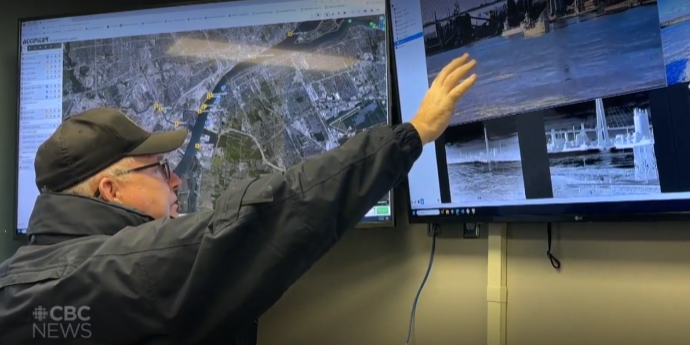
Ontario launches new border security measures in wake of Trump tariff threats. But will it be enough? 9 days agoNewsDuration1:57 As Trump’s tariff threat looms, Ontario is taking steps to strengthen the border. Operation Deterrence is aimed at preventing illegal border crossings and cross-border transporting of illegal guns and drugs. The province is also calling on the federal government to do more to help. CBC’s Pratyush Dayal spoke with Harbour Master Peter Berry of the Windsor Port Authority about this. Link to Story and Video Here
Accipiter deployed at Port of Windsor assists with Border Integrity
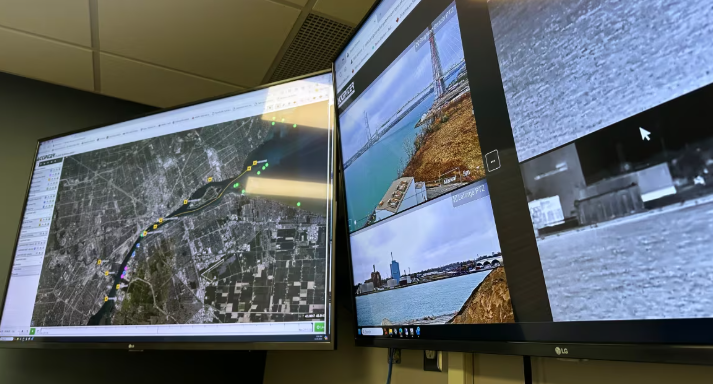
Windsor’s port authority braces for cross-border swimmers after Trump win Harbour master Peter Berry has worries about ‘more desperate’ people trying to cross the water Dalson Chen · CBC News · Posted: Nov 22, 2024 4:00 AM EST | Last Updated: November 22, 2024 Trump’s mass deportation pledge raises fears of increase in Detroit-Windsor border swimmers 2 months agoDuration2:05 Will Donald Trump’s promised mass deportation of undocumented immigrants push desperate people to illegally cross the Detroit River? Peter Berry, harbour master of the Windsor Port Authority, is worried about it. CBC’s Dalson Chen spoke with Berry and Ian Smith of the Windsor detachment of RCMP. Social Sharing FacebookXEmailRedditLinkedIn With U.S. President-Elect Donald Trump promising to enact mass deportations of undocumented immigrants, Windsor’s harbour master is expressing worries about a possible uptick in people trying to illegally cross the Detroit River. “I think we’ll be seeing much more desperate people who are trying to get out of the United States and get to Canada and make claims,” said Peter Berry of the Windsor Port Authority. “These are people who have a goal, a destination in mind, where they can’t meet regular crossing requirements at a border point. So they’re trying between those points — which is crossing the Detroit River.” Harbour Master Peter Berry of the Windsor Port Authority. (Dalson Chen/CBC) Stories of illegal crossings of the Detroit River — in both directions, whether by watercraft or by swimming — have been told for generations. But Berry said that since the latest U.S. election, on Nov. 5, he has been seeing “an increase in swimmers.” “I am seeing things I did not see this time last year.” Canada prepares for a rise in border crossings with threat of mass deportations under Trump. Canadian border city immigration lawyer expects big rise in asylum claims, illegal crossings. Berry admits there’s no data yet to legitimize his concerns. However the WPA’s observational resources allow him to notice things in local waters that are typically overlooked. “My mandate is not so much the enforcement, but watching for the safety,” he said. “I think observation is the first step. We need to interdict. We need to deal with the people who are crossing illegally… I do not want to see anybody die in that river.” Berry’s comments come after LaSalle police recovered a body from the Detroit River on Nov. 13. The deceased was found floating near Fighting Island. No details have been released regarding the individual’s identity or the circumstances of death. The office of Ontario’s chief coroner said last week that its investigation of the body continues. Const. Alaina Atkins of LaSalle police said the service hasn’t noticed a recent increase in activity in the water — but any illegal crossing of the river is dangerous, especially in darkness and when water temperatures are frigid. “We as a service encourage people to use legal means to move across borders, and not take undue risks,” Atkins stated. The view across the Detroit River from the Windsor side, at one of the narrowest points of the river. (Dalson Chen/CBC) Luke Reimer, a spokesperson for the Canada Border Services Agency, said any refugee claimant seeking entry to Canada from the U.S. must abide by legislation called the Safe Third Country Agreement. Reimer said CBSA is responsible for enforcing the law at designated points of entry, but enforcement of the border between those points typically falls upon RCMP. “It is illegal to enter between ports of entry, and it is not safe,” Reimer wrote. Some of the Harbour Master’s radio equipment at the Windsor Port Authority. (Dalson Chen/CBC) Ian Smith, a spokesperson for RCMP’s Windsor detachment, said they also haven’t noticed any unusual recent activity around the Detroit River. But he has a message for those weighing their chances. “Our advice is: Don’t,” Smith told CBC Windsor. “Present yourself to Canada Border Services Agency. If you’re seeking asylum or refugee status, there’s the proper way to do it.” “Our posture at the Canada-U.S. border remains unchanged. And if anything does happen when the Trump administration comes into term in January — we’re definitely prepared.” A Windsor perspective of the Ambassador Bridge over the Detroit River. At points along the river, Canada and the U.S. are separated by only 0.8 kilometres of water. (Dalson Chen/CBC) Meanwhile, Berry will continue his watch of the Detroit River. He hopes to speak with a parliamentary sub-committee about his concerns in the near future. “Windsor Port Authority doesn’t have a law enforcement mandate related to immigration,” he explained. “The most important thing for the port authority is the safety of the port. That’s what I’m looking toward. Yes, there’s going to be politics, and discussion, and posturing. But most important is the safe and efficient operation of the port.” Link to full article and video
Windsor Port Authority using Accipiter Radar for over a decade
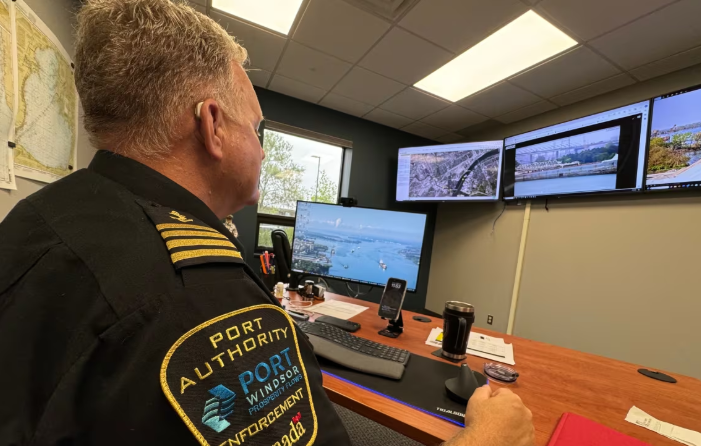
Vessel-tracking tech helps keep boaters safe, assist with crime along Canada-U.S. border Windsor Port Authority has been quietly using the Accipiter radar for the last 12 years Jason Viau · CBC News · Posted: Sep 26, 2024 4:00 AM EDT | Last Updated: September 26, 2024 How this boat-tracking radar keeps people safe and helps with cross-border crime. The Windsor Port Authority is the only agency in this southwestern Ontario region with an Accipiter radar. It tracks the movement of boats other radars cannot see for the safety of people on the water and to assist with criminal investigations. At the click of a button on his office computer, Windsor Harbour Master Peter Berry can see any moving vessel on the Detroit River and parts of Lake St. Clair. For the last 12 years, Berry has been using Accipiter radar technology to ensure large commercial vessels are aware of smaller fishing boats in the area. And since area law enforcement agencies do not have this technology, Berry often provides data to them to assist with criminal investigations or tip them off to suspicious boating activity along the international border. “Looking at this as intelligence-driven law enforcement, it’s important,” said Berry. “As we look at who’s making trips and not reporting in to [customs.] All of that can be tracked with this technology.” Windsor Port Authority Harbor Master Peter Berry looks at radar technology and cameras monitoring the Detroit River. (Jason Viau/CBC) The Windsor-Detroit corridor is “busy,” according to Berry, with “a lot human smuggling going through the St. Clair River.” “We have guns crossing, drugs crossing,” Berry said. RCMP Const. Ian Smith said the Windsor Port Authority’s radar technology has been useful. “We’ve done search operations where we’ve an RCMP member watching the Accipiter radar, calling out to our vessels to intercept boats,” said Smith. RCMP Const. Ian Smith said they’ve used the Windsor Port Authority’s radar technology two times in the last few years. (Jason Viau/CBC) Primarily, Berry said the radar technology is used to monitor the flow of vessels in the Detroit River and help keep people on the water safe. “We look at this as a navigation tool,” he said. Initially, the Windsor Port Authority agreed to trial the technology with the creators of the Accipiter radar. Now, Berry said the cost is covered through grants. Link to full article and video