
Accipiter Radar provides drone detection for Blue Angels
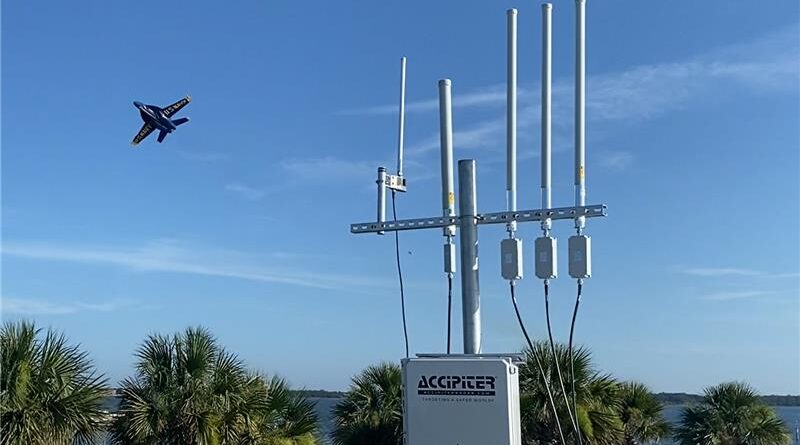
Accipiter Radar was in Florida earlier this month with the Blue Angels providing invaluable drone detection service to the US Navy and its partners. The Blue Angels inspire a culture of excellence and service by representing the United States Navy and Marine Corps to audiences globally through their awe-inspiring and well-known air shows. Accipiter Radar worked closely with Airspace Link, Inc. and Seneca Nation Group during the July 2025 Pensacola Blue Angels Annual Beach Air Show, helping protect the Blue Angels and other participating aircraft from clueless and careless drones in the airspace. Accipiter’s drone detection sensors and services were deployed for use by a multiagency contingent in Escambia County to support safe flight operations throughout the airshow. Airspace Link’s Drone Operations Management System (DOMS) was fed in real-time by Accipiter’s Counter UAS Smart Surveillance Network and assisted in securing the operational airspace. Chief Greg Campenella of Escambia County Fire and Rescue explains: “This collaboration effort showcased a new level of innovation in air space control, management, and collision avoidance, helping maintain a sterile air space throughout the event. It was an amazing experience.” “Drones bring an exciting promise of transforming air mobility, but drones are as difficult for pilots to see as birds and can cause even more damage” notes Dr. Tim Nohara, President, and CEO of Accipiter. Dr. Nohara goes on to explain, “aviation safety can be maintained by having both drone operators and crewed pilots share the safety responsibility of airspace.” Accipiter Radar continues to be a leader in Smart Surveillance Networks and automated decision support capabilities for new applications and threats which provide force multiplication and enable information sharing and interoperability with practitioners who work together to keep us safe. About Accipiter Radar Accipiter Radar is a North American company that develops, sells, and operates high-performance radar and sensor intelligence networks engineered to monitor the environment and characterize the behavior of targets such as small vessels, low flying aircraft, vehicles and birds, as well as distributed phenomenon such as weather, waves and snow/ice. The result is enhanced wide-area safety and security through unprecedented domain awareness for 21st century applications in homeland security, aviation safety and security, and environmental protection. Accipiter Radar Technologies Inc. of Niagara, Ontario Canada and Accipiter Radar Corporation of Niagara, New York, USA are Targeting a Safer World® and have won business from of all levels of government in North America, as well as major corporations and governments in various parts of the world. For more information visit www.accipiterradar.com Or contact: Dr. Tim J. Nohara President & CEO, Accipiter Radar info@accipiterradar.comDownload PDF
Enhancing safety & security along the Northern Border
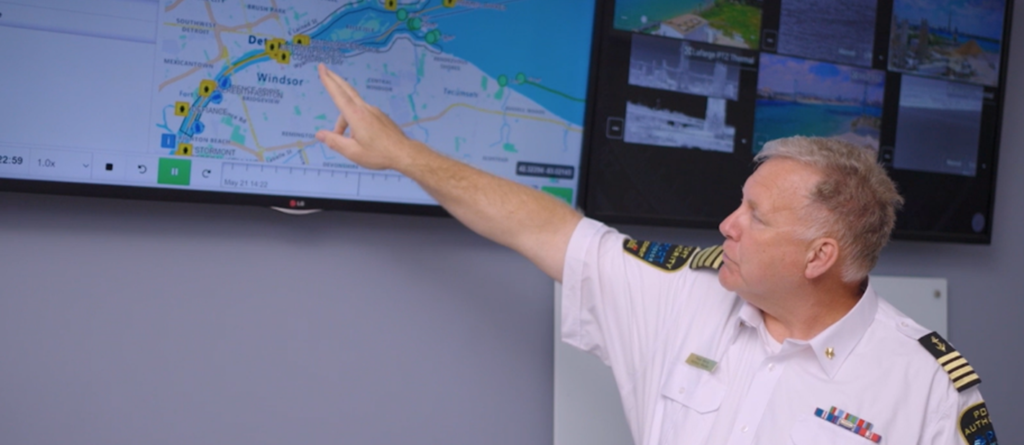
With border security an urgent concern for both Canada and the United States and involving numerous agencies at the federal, provincial/state, and local levels, Accipiter Radar’s proven smart surveillance network is helping to secure a section of the 2,000 km water border that runs through the Great Lakes at the Ports of Windsor and Detroit, using an integrated network of state-of-the-art Accipiter® radars and Axis bi-spectral cameras installed on both sides of the border. “This smart surveillance network simply needs to be expanded as was originally planned under Harper and Obama to cover the critical lakes and rivers through which the border runs, in order to quickly achieve effective border security across Detroit Sector, Buffalo Sector and Swanton Sector as urged by Trump and Homan”, says Accipiter’s President and CEO Tim Nohara. Accipiter’s network is designed to support secure information sharing and interoperability by automatically generating (using sophisticated signal and data processing, data mining and AI) and delivering the right surveillance-derived information to the right person at the right time. These capabilities are recognized and have been proven operationally by multiple agencies in Canada and the US to enable intelligence-led enforcement and the efficient use of frontline resources and response assets such as boats, vehicles, aircraft (e.g. Black Hawks), and drones resulting in force multiplication. “We’ve designed our smart surveillance networks similar to cellular networks, and you roll them out the same way”, says Nohara. “The expanded network can use different surveillance sensors (needed on both sides of the border, kind-of-like roaming) which plug-and-play together just like iPhone and Android smart phones. And the supported sensors include those that track small vessels, low-flying aircraft and drones (C-UAS) used in smuggling guns, drugs and other contraband across our borders, while also enabling the safe, beyond visual line of sight (BVLOS) use of drone as first responder (DFR) by law enforcement by detecting and avoiding (DAA) crewed aircraft in accordance with aviation regulations to share the airspace. Furthermore, each user can run their own apps (or use ours) and share information with each other just like sending e-mails or calendar invites to each other even though you are using different software or service providers on your smart phones.” Port of Windsor Accipiter Common Operating Picture Accipiter is ready to help Ottawa secure the border to reduce gun crime and make our streets safe again, and Ontario to make Fortress Am-Can a reality. Let’s get it done as the time for talk is over. “We are committed to assisting Canada and the United States in their goal to rapidly and affordably secure our Great Lakes border to protect North American lives and livelihoods on this critical, continental trade corridor, and I invite you to reach out to me directly.” Tim Nohara Berry & RCMP on Accipiter – CBC News Accipiter News About Accipiter Radar We believe a safer world is a better world. That’s why we help keep you safe. We do this by giving safety and security practitioners better awareness and understanding of the threats they protect us from. To achieve this, we design smart surveillance networks engineered to monitor the environment and characterize the behavior of targets such as vessels, aircraft, drones, birds, and vehicles, as well as distributed phenomenon such as weather, waves and ice. Accipiter Radar is a North American company who sells and operates its smart surveillance networks around the world to provide all domain awareness for 21st century applications in homeland security, aviation safety and security, and environmental protection. Accipiter has been Targeting a Safer World® for 30 years and has won business from of all levels of government in North America, as well as major corporations and governments in various parts of the world. For more information visit www.accipiterradar.com Or contact: Dr. Tim J. Nohara President & CEO, Accipiter Radar info@accipiterradar.com Download PDF
Accipiter and Axis Provide Port of Windsor with Enhanced Surveillance
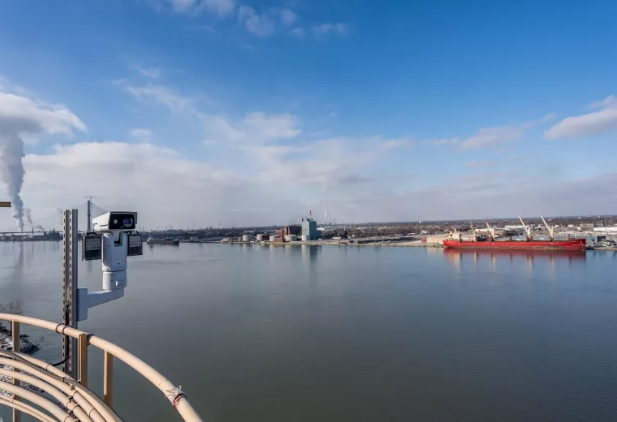
Transportation Smart Vessel Tracking Leads to Safer River Traffic Organization: Windsor Port AuthorityLocation: Windsor, Ontario, CanadaCustomer need: Perimeter and area security, Property and asset protection, Public safetyWindsor, Ontario, Canada, 2025 Windsor Port Authority uses Axis bispectral cameras and Accipiter radars to monitor river traffic along the U.S.-Canada border. They also help the Harbor Master prevent vessel collisions and detect smugglers crossing the shipping lane. Managing traffic on a busy international waterway The Windsor Port is located on the Detroit River, a waterway bordering the United States and Canada. Because it serves as the passageway between Lake Huron and Lake Erie, there could be 6,000 to 9,000 cargo vessels navigating the channel annually. In addition to commercial ships passing by or coming into port, over 10,000 small fishing boats and pleasure crafts weave their way through the congested waters. “If I don’t have detailed knowledge of the traffic going through these waters, we could have some horrific accidents,” shares Peter Berry, Harbor Master and Vice President of Operations for the Windsor Port Authority. For years, Berry relied solely on radar coverage to help him monitor river activity. The marine domain awareness platform from Accipiter Radar Technologies allowed him to identify commercial vessels, small craft, even jet skiers and debris in the water. “All of these objects show up as color-coded icons on my computer screen,” explains Berry. But the one thing lacking in the solution was the ability to see any visual details of those objects. To address that limitation, Accipiter integrated Axis bispectral cameras into the platform. The dual-sensor cameras provide 360-degree surveillance with both thermal detection and visual verification. “Now when radar identifies a target, the Axis cameras visually confirm that target for me,” says Berry. Berry asserts that the cameras provide such clarity that he can clearly read a license plate across the river which is almost a mile away. “Even in lowlight I can tell police that the camera saw four people onboard,” shares Berry. “If you’re going to intercept it, that’s valuable information to know.” Automatically steering cameras to targeted vessels “Accipiter is programmed to track the longitude and latitude of every vessel in the waterway,” explains Tim Nohara, President and CEO of Accipiter Radar Technologies. “It uses those coordinates to grab the appropriate camera and automatically steer it to a target without any human intervention. The software controls the camera’s pan/tilt/zoom and can even direct it to follow the vessel as it moves through the channel.” If the Harbor Master wants to look closer at a certain area, he always has the option to click on the map or a radar target icon on his integrated radar display and redirect the nearest camera to that location for closer inspection. Alone, the coastal surveillance platform provides wide-area, real-time detection and tracking coupled with on-the-fly and interactive analytics applied to historic target data. Augmenting the solution with Axis cameras adds a visual layer of awareness that further helps the Harbor Master make timely, informed decisions about his domain. Broadcasting warning about obstruction in channel One cold wintry day in December, the U.S. Coast Guard notified Berry that they’d spotted a boat stopped in the middle of the river. The grain carrier had caught fire, dropped anchor, and was dead in the water. “When I looked at the camera view on my computer, I saw that Accipiter had already pointed the camera at the vessel,” reports Peter Berry. “You couldn’t tell from the outside that it was on fire. But because the Axis cameras have a thermal aspect, I could see the heat signature of the fire and that it was contained in the ship’s engine room.” Berry continued to monitor the flaring heat onboard the ship but also sent out a navigational warning to other vessels on the river, including the boat’s exact longitude and latitude as recorded by the Accipiter radar display. While the darkness of the hour prevented them from seeing anything from shore, the technology also provided thermal visuals to monitor activity on the bridge and deck. Thankfully everyone was safely evacuated. “Without these two technologies, we would have been blind,” claims Berry. Monitoring high risk construction projects The Harbor Master also serves as the general contractor for any construction projects at the port. “During construction of the new Gordie Howe Bridge we were concerned about material or construction workers falling into the river,” shares Berry. “I used the Axis cameras and integrated radars extensively to manage traffic passing underneath the bridge. It helped me ensure vessels navigated safely through the construction area.” Managing a busy port along an international border can be quite challenging. Axis cameras and Accipiter radars give us the vital domain awareness we need to prevent collisions on our waterway, detect illegal activity, and save lives. Peter Berry, Harbor Master and Vice President of Operations for Windsor Port Authority. Conveying precise coordinates for faster rescues Given how cold the Detroit River is in the winter, it wouldn’t take long for someone treading water to suffer hypothermia and drown. When Berry got a call from the U.S. Coast Guard that they had spotted a person frantically treading water by the Ambassador Bridge he looked at the radar icons on his screen and could see something moving and the coordinates of that location. “I pulled up the camera and could see the person in the riverway,” states Berry. “I looked on the radar display to see what boats were in the area and requested a U.S. mail boat nearby to rescue him.” Once the person was retrieved, Berry sent a video snapshot to the Coast Guard confirming the rescue. In the past Berry would have driven down to the river with binoculars and tried to spot the person and direct the rescue. “That would have eaten up valuable time that could affect the man’s chances of surviving hypothermia or drowning,” insists Berry. “In instances like this, minutes count. And the combination of Accipiter and Axis cameras provide me those minutes.” Discovering human traffickers and drug
Accipiter part of Variable Pitch Inc. Consortium to Revolutionize Canadian Airspace with Drone Tech

Variable Pitch Inc. Chosen to Revolutionize Canadian Airspace, Healthcare, and Infrastructure with Drone Technology News provided by EIN PresswireDec 10, 2024, 2:34 PM ET TORONTO, ONTARIO, CANADA, December 10, 2024 /EINPresswire.com/ — Drones are no longer just a futuristic concept—they are actively transforming how we deliver life-saving medical supplies, inspect critical infrastructure, and manage the air traffic for remotely piloted, unmanned aircraft systems. With groundbreaking technology that makes drone operations safer and more efficient, Transport Canada and NAV CANADA have selected Canada’s Variable Pitch Inc. and its consortium to participate in Phase 2 of the Remotely Piloted Aircraft Systems (RPAS) Traffic Management trials. “As advancements in drone technology continue to redefine aviation, air traffic management must also evolve for the safe and successful integration of RPAS into Canadian airspace,” said Ryan Coates, Executive Director of the RPAS Task Force at Transport Canada. This innovative project unlocks immediate, real-world applications poised to revolutionize healthcare logistics and infrastructure maintenance while laying the foundation for the safe and scalable use of drones in Canada’s airspace. “The second phase of trials will offer crucial experiential learning for the development of the Canadian RPAS Traffic Management system, enhancing the safe integration of Remotely Piloted Aircraft Systems,” said Alan Chapman, co-chair of the Trials Executive Steering Committee (TESC) and Director of RPAS Traffic Management at NAV CANADA. “Integrating third-party services and capabilities with NAV CANADA’s centralized services will ensure airspace safety while collaboratively advancing new use cases, including those that require Beyond Visual Line of Sight (BVLOS) operations.” Changing the Skies: A New Era in Airspace Management As the number of drones in our skies increases, managing air traffic safely and efficiently becomes more challenging. Traditional systems were built for piloted aircraft, but drones fly farther, faster, and navigate through complex airspace like densely populated cities, remote communities, and hard-to-reach infrastructure. Variable Pitch Inc. is leading a consortium focused on developing advanced systems to safely integrate drones into existing airspace, enabling them to operate seamlessly alongside planes and helicopters. These new solutions will allow drones to avoid collisions and navigate complex environments using advanced radar, real-time weather data, and AI-driven traffic control. This technology will unlock the full potential of ‘Beyond Visual Line of Sight’ (BVLOS) drone operations, allowing longer, more sophisticated missions. It marks a turning point for industries like logistics and surveillance that rely on drones for their efficiency and speed. Transforming Healthcare: Faster, Smarter, Safer Deliveries In healthcare, drones can save lives by delivering essential supplies to remote or hard-to-reach areas. In emergencies, drones with medical supplies, including blood, vaccines, and medications, can bypass roadblocks, providing urgently needed items faster than ground transportation. This technology is especially critical in rural regions or during natural disasters when traditional logistics are disrupted. “Drones can bridge the gap between urban healthcare centres and remote communities,” said Richard Brown, Chief Operating Officer of Variable Pitch Inc. “The potential to deliver life-saving treatments within minutes can dramatically change outcomes in emergencies.” Drones will revolutionize access to critical healthcare supplies by dramatically reducing delivery times and enhancing efficiency. They will modernize healthcare logistics and extend the reach of medical services, transforming healthcare delivery across Canada and worldwide. Revolutionizing Infrastructure Immediate, Safer Inspections Drones are also set to transform how we inspect and maintain critical infrastructure like bridges, power lines, and railways. Traditionally, these inspections require manual labour, often involving high costs and risks to human safety. With drones, inspections can be conducted more quickly, accurately, and without endangering workers. Drones with high-resolution cameras and sensors can access hard-to-reach locations, gather real-time data, and detect potential issues like cracks or corrosion before they become serious problems. This proactive approach ensures safer, more reliable infrastructure while reducing long-term maintenance costs. “By speeding up inspections and improving accuracy, drone technology will help prevent costly repairs and improve the safety of our roads, bridges, and energy grids,” added Brown. A Game-Changing Opportunity for Investors This technology represents a multi-billion-dollar opportunity for investors. As drone use expands and governments seek safer, more efficient ways to manage air traffic, Variable Pitch Inc. and its partners are positioned to lead this emerging market. With applications across industries from healthcare to logistics to infrastructure, the impact of this innovation will be felt worldwide. The Ontario-based trials will demonstrate these real-world applications, including medical supply deliveries and infrastructure inspections. Variable Pitch Inc. is supported by a consortium of leading companies, including High Lander Aviation (Israel), Accipiter Radar (Canada), TruWeather (USA), InDro Robotics (Canada), Dimetor (Austria), Speedbird Aero (Brazil), and Viasat Inc. (USA). Together, they are developing a comprehensive system that will shape the innovative potential of drone operations. About Variable Pitch Inc. Variable Pitch Inc. is a leader in advanced drone technology and air traffic management systems. In partnership with industry leaders, Variable Pitch Inc. is pioneering the future of safe, efficient, and scalable drone operations across Canada and beyond. Consortium Highlander (https://www.highlander.io/) Highlander’s Vega UTM is a leading unmanned traffic management platform providing autonomous RPAS traffic management. Proven in the field and compliant with international regulatory standards, Vega UTM plays a key role in airspace safety by supplementing air traffic management systems and enabling airspace authorities and commercial operators to manage RPAS at all scales and in the most complex airspaces. Accipiter Radar Technologies (https://www.accipiterradar.com/) A global leader in radar surveillance solutions, Accipiter provides advanced radar systems to enhance air traffic safety, including detecting and tracking low-level airborne objects. Their expertise supports real-time awareness and safety in suburban and high-density areas. Viasat Inc. (https://www.viasat.com/aviation/advanced-air-mobility/velaris/) A global communications company that offers high-speed satellite and wireless connectivity solutions. Its technologies ensure continuous communication, command, and control for RPAS operations, enabling secure, reliable, and uninterrupted RPAS operations in remote and suburban areas. TruWeather Solutions (https://truweathersolutions.com/) Specializing in micro-weather forecasting, TruWeather provides highly accurate and real-time weather data to ensure RPAS operations can navigate safely in varying environmental conditions. Their technology is critical for mitigating weather-related risks and enhancing operational efficiency. Dimetor (https://www.dimetor.com/) Analytics, data, and service platform that enables
Accipiter proud to be part of Border Security with Port of Windsor
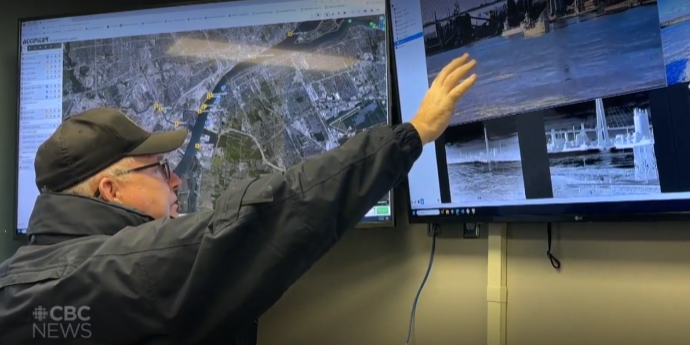
Ontario launches new border security measures in wake of Trump tariff threats. But will it be enough? 9 days agoNewsDuration1:57 As Trump’s tariff threat looms, Ontario is taking steps to strengthen the border. Operation Deterrence is aimed at preventing illegal border crossings and cross-border transporting of illegal guns and drugs. The province is also calling on the federal government to do more to help. CBC’s Pratyush Dayal spoke with Harbour Master Peter Berry of the Windsor Port Authority about this. Link to Story and Video Here
Dr. Tim Nohara of Accipiter part of Detroit Advanced Air Mobility Ecosystem Expert Panel
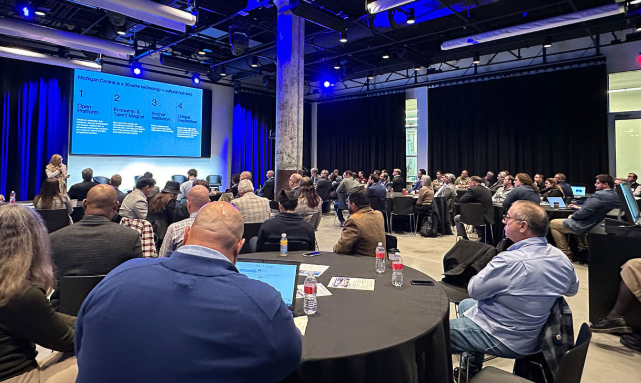
In the heart of Motor City, a new era of aviation has started to unfold. Detroit, long known for its automotive innovation, is now positioning itself as a hub for Advanced Air Mobility (AAM). With Michigan’s unique blend of automotive innovation, technological infrastructure and strategic vision, the state aims to transform from an automotive powerhouse to a cutting-edge mobility laboratory. This article explores how several key organizations—Airspace Link, uAvionix, Accipiter Radar and the Michigan Central Innovation District—are collaborating to create a robust ecosystem that supports the integration of drones, and eventually larger air taxis, into the national airspace. Read on as we delve into the critical components Detroit has blended for successful AAM integration, from funding and physical infrastructure to software, communication and airspace awareness systems. Expert panel from the AAIR Forum, R to L: Dr. Tim Nohara – President & CEO, Accipiter Radar, Jim Cieplak, uAvionix and Michael Healander, Co-Founder, President & CEO, Airspace Link The Michigan Advantage: Detroit’s Mobility and Innovation Ecosystem Detroit’s unique blend of urban infrastructure, technological prowess and manufacturing heritage makes it an ideal testbed for AAM. The city’s commitment to innovation seems evident in the collaborative efforts between industry leaders, government agencies and academic institutions. A Comprehensive Mobility Strategy Michigan’s strategy for a thriving mobility ecosystem extends beyond traditional automotive mobility to include AAM and drone technology. With ongoing investments in infrastructure, technology and human capital, the city of Detroit, in particular, continues to build on its automotive heritage and embrace the future of mobility to position itself as a global leader in the development and implementation of AAM solutions. Justine Johnson, Chief Mobility Officer for the state of Michigan, highlighted the state’s comprehensive approach to mobility innovation that includes various state departments. “We’re utilizing clean energy to help move people, goods and information across land, water and air,” Johnson explained. The state created noteworthy mobility programs, such as the Michigan Mobility Pilot platform. This platform has facilitated dialogue between traditional aviation and the future of air mobility. The Advanced Air Mobility Activation Fund As further evidence of the state’s commitment to innovation it has, along with Michigan Central, invested millions of dollars into AAM. One key example, the Advanced Air Mobility Activation Fund, a partnership between the Michigan Department of Transportation and the Office of Future Mobility and Electrification, aims to support projects that address real-world problems, particularly in rural areas, by leveraging drone technology for medical supply delivery and other critical services. They do this in the Michigan Central Innovation District, a literal and figurative launchpad for AAM technologies. The Michigan Central Innovation District: A Living Laboratory Among other features, the Michigan Central Innovation District includes a three mile radius urban testing ground for AAM so companies can evaluate their operational solutions in real-world scenarios and accelerate the path to commercialization. This summer, Michigan Central celebrated the opening of an Operations Center in the historic Michigan Central Station building. Next on tap: a 14th-floor Air Traffic Control tower. In the meantime, today, real-world drone deliveries have already started taking place as part of pilot programs from the roof of the Newlab, a mobility startup hub located on the Michigan Central innovation campus next door to the future Air Traffic Control tower. Michael Healander, Co-Founder, President & CEO of Airspace Link, highlighted the district’s significance. “This is a really new opportunity for businesses,” he said. “We’re not just talking about first responders or infrastructure inspections. We’re creating a sustainable business environment where companies can operate and scale with customer demand.” As the Detroit AAM ecosystem evolves, it continues to attract businesses and innovators from around the world. The Michigan Central Innovation District, with its state-of-the-art facilities and supportive environment, is fast becoming a magnet for companies looking to develop and test their AAM technologies in real-world conditions. View of a drone flying over Detroit from the roof of Newlab, the startup partner to Michigan Central that runs the innovation ecosystem. Leveraging Infrastructure for Integration: The Companies Making AAM Happen In the meantime, a public-private partnership grows in the background to turn these AAM dreams into reality. Airspace Link, uAvionix and Accipiter Radar continue collaborating with the Michigan Central Innovation District to provide the infrastructure backbone necessary to integrate AAM into Detroit’s skies. These industry partners work together to address challenges such as: integrating unmanned aircraft with traditional aviation traffic, developing robust detect-and-avoid systems, ensuring reliable communication links between ground control and drones and mitigating potential conflicts with birds and other airspace users. Airspace Link: The Connective Tissue Airspace Link’s AirHub Portal platform serves as the connective tissue for the AAM ecosystem in Detroit and beyond. Through its digital platform AirHub Portal, Airspace Link provides crucial services like B4UFLY and LAANC, while also offering customized solutions such as the community-oriented FlySafe Program. This comprehensive approach enables Airspace Link to equip pilots, municipalities, and local populations with the tools to adopt drone technology with assurance and expand their operations. With an average of 30,000 flight planning efforts per day and thousands of FAA authorizations processed, the company stands at the epicenter of drone integration. Healander outlined five critical components that Airspace Link literally links together: hardware and infrastructure, software, drone OEMs and operators, governance and policy and business operations. By harmonizing these elements, Airspace Link has created a scalable model that can be replicated across the country. “We have over 5000 businesses and government agencies on our platform today,” Healander explained. “From small two-person drone operations to major players like the Air Force and UPS, we’re supporting just about every type of operation you can think of right here in Detroit and in other areas. We welcome you to come too.” uAvionix: Enhancing Communication Infrastructure Jim Cieplak, a consultant at uAvionix, who brings decades of experience in both manned and unmanned aviation to the Detroit AAM ecosystem, described how uAvionix has developed robust communication systems that enable drones to interact seamlessly with existing air traffic control networks. The company facilitates advanced operations by offering
Accipiter deployed at Port of Windsor assists with Border Integrity
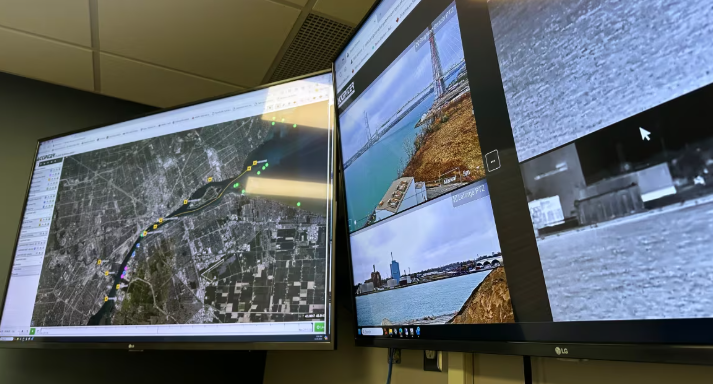
Windsor’s port authority braces for cross-border swimmers after Trump win Harbour master Peter Berry has worries about ‘more desperate’ people trying to cross the water Dalson Chen · CBC News · Posted: Nov 22, 2024 4:00 AM EST | Last Updated: November 22, 2024 Trump’s mass deportation pledge raises fears of increase in Detroit-Windsor border swimmers 2 months agoDuration2:05 Will Donald Trump’s promised mass deportation of undocumented immigrants push desperate people to illegally cross the Detroit River? Peter Berry, harbour master of the Windsor Port Authority, is worried about it. CBC’s Dalson Chen spoke with Berry and Ian Smith of the Windsor detachment of RCMP. Social Sharing FacebookXEmailRedditLinkedIn With U.S. President-Elect Donald Trump promising to enact mass deportations of undocumented immigrants, Windsor’s harbour master is expressing worries about a possible uptick in people trying to illegally cross the Detroit River. “I think we’ll be seeing much more desperate people who are trying to get out of the United States and get to Canada and make claims,” said Peter Berry of the Windsor Port Authority. “These are people who have a goal, a destination in mind, where they can’t meet regular crossing requirements at a border point. So they’re trying between those points — which is crossing the Detroit River.” Harbour Master Peter Berry of the Windsor Port Authority. (Dalson Chen/CBC) Stories of illegal crossings of the Detroit River — in both directions, whether by watercraft or by swimming — have been told for generations. But Berry said that since the latest U.S. election, on Nov. 5, he has been seeing “an increase in swimmers.” “I am seeing things I did not see this time last year.” Canada prepares for a rise in border crossings with threat of mass deportations under Trump. Canadian border city immigration lawyer expects big rise in asylum claims, illegal crossings. Berry admits there’s no data yet to legitimize his concerns. However the WPA’s observational resources allow him to notice things in local waters that are typically overlooked. “My mandate is not so much the enforcement, but watching for the safety,” he said. “I think observation is the first step. We need to interdict. We need to deal with the people who are crossing illegally… I do not want to see anybody die in that river.” Berry’s comments come after LaSalle police recovered a body from the Detroit River on Nov. 13. The deceased was found floating near Fighting Island. No details have been released regarding the individual’s identity or the circumstances of death. The office of Ontario’s chief coroner said last week that its investigation of the body continues. Const. Alaina Atkins of LaSalle police said the service hasn’t noticed a recent increase in activity in the water — but any illegal crossing of the river is dangerous, especially in darkness and when water temperatures are frigid. “We as a service encourage people to use legal means to move across borders, and not take undue risks,” Atkins stated. The view across the Detroit River from the Windsor side, at one of the narrowest points of the river. (Dalson Chen/CBC) Luke Reimer, a spokesperson for the Canada Border Services Agency, said any refugee claimant seeking entry to Canada from the U.S. must abide by legislation called the Safe Third Country Agreement. Reimer said CBSA is responsible for enforcing the law at designated points of entry, but enforcement of the border between those points typically falls upon RCMP. “It is illegal to enter between ports of entry, and it is not safe,” Reimer wrote. Some of the Harbour Master’s radio equipment at the Windsor Port Authority. (Dalson Chen/CBC) Ian Smith, a spokesperson for RCMP’s Windsor detachment, said they also haven’t noticed any unusual recent activity around the Detroit River. But he has a message for those weighing their chances. “Our advice is: Don’t,” Smith told CBC Windsor. “Present yourself to Canada Border Services Agency. If you’re seeking asylum or refugee status, there’s the proper way to do it.” “Our posture at the Canada-U.S. border remains unchanged. And if anything does happen when the Trump administration comes into term in January — we’re definitely prepared.” A Windsor perspective of the Ambassador Bridge over the Detroit River. At points along the river, Canada and the U.S. are separated by only 0.8 kilometres of water. (Dalson Chen/CBC) Meanwhile, Berry will continue his watch of the Detroit River. He hopes to speak with a parliamentary sub-committee about his concerns in the near future. “Windsor Port Authority doesn’t have a law enforcement mandate related to immigration,” he explained. “The most important thing for the port authority is the safety of the port. That’s what I’m looking toward. Yes, there’s going to be politics, and discussion, and posturing. But most important is the safe and efficient operation of the port.” Link to full article and video
Windsor Port Authority using Accipiter Radar for over a decade
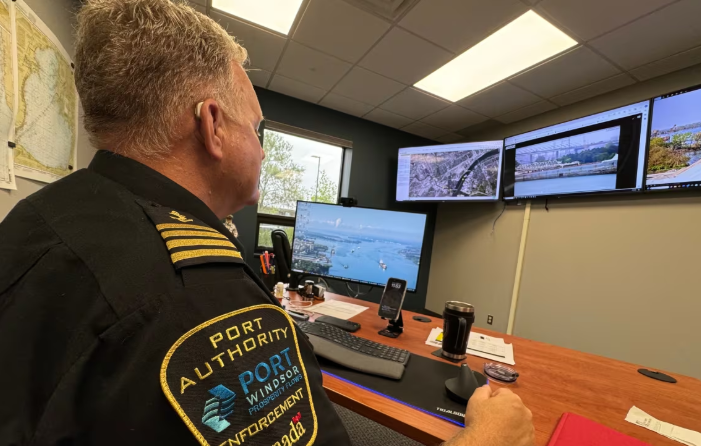
Vessel-tracking tech helps keep boaters safe, assist with crime along Canada-U.S. border Windsor Port Authority has been quietly using the Accipiter radar for the last 12 years Jason Viau · CBC News · Posted: Sep 26, 2024 4:00 AM EDT | Last Updated: September 26, 2024 How this boat-tracking radar keeps people safe and helps with cross-border crime. The Windsor Port Authority is the only agency in this southwestern Ontario region with an Accipiter radar. It tracks the movement of boats other radars cannot see for the safety of people on the water and to assist with criminal investigations. At the click of a button on his office computer, Windsor Harbour Master Peter Berry can see any moving vessel on the Detroit River and parts of Lake St. Clair. For the last 12 years, Berry has been using Accipiter radar technology to ensure large commercial vessels are aware of smaller fishing boats in the area. And since area law enforcement agencies do not have this technology, Berry often provides data to them to assist with criminal investigations or tip them off to suspicious boating activity along the international border. “Looking at this as intelligence-driven law enforcement, it’s important,” said Berry. “As we look at who’s making trips and not reporting in to [customs.] All of that can be tracked with this technology.” Windsor Port Authority Harbor Master Peter Berry looks at radar technology and cameras monitoring the Detroit River. (Jason Viau/CBC) The Windsor-Detroit corridor is “busy,” according to Berry, with “a lot human smuggling going through the St. Clair River.” “We have guns crossing, drugs crossing,” Berry said. RCMP Const. Ian Smith said the Windsor Port Authority’s radar technology has been useful. “We’ve done search operations where we’ve an RCMP member watching the Accipiter radar, calling out to our vessels to intercept boats,” said Smith. RCMP Const. Ian Smith said they’ve used the Windsor Port Authority’s radar technology two times in the last few years. (Jason Viau/CBC) Primarily, Berry said the radar technology is used to monitor the flow of vessels in the Detroit River and help keep people on the water safe. “We look at this as a navigation tool,” he said. Initially, the Windsor Port Authority agreed to trial the technology with the creators of the Accipiter radar. Now, Berry said the cost is covered through grants. Link to full article and video
Local Rowing Team competing in Henley Regatta, England

Ontario, Canada For Immediate Release Accipiter Radar is proud to be a sponsor for the E.L. Crossley Senior Women’s Rowing Team as they race for the Diamond Jubilee Challenge Cup at the prestigious and historical Royal Henley Regatta next month in England. “We are thrilled to have the opportunity to support our local athletes as they take part in this international competition.” noted Accipiter President and CEO Dr. Tim J. Nohara, “these dedicated athletes are representing our region, province and Canada with determination and as proud neighbours, we want to wish them the very best of luck at this event.” The team of 65 rowers has been incredibly successful over the years winning 16 gold medals at the Canadian Secondary School Regatta, 4 silvers and one bronze for a total of 21 medals. In the United States, the team has won golds in two regattas, the Stotesbury Cup in Philadelphia and the Head of the Charles in Boston where they also took gold in all entered races. As a local company that deploys innovative surveillance systems globally, contributing to the success of remarkable athletes like the E.L. Crossley Senior Women’s Rowing Team aligns well with Accipiter’s values and mission. The Henley Regatta was established in 1839 and is visited by more than 300,000 people each year with rowers from around the globe taking part in various races. For more information on the event please visit their website at https://www.hrr.co.uk/about/. You can follow E.L. Crossley Rowing Team progress on their Facebook page at https://www.facebook.com/p/EL-Crossley-Rowing-100064197264517/. Go Blue and Gold! About Accipiter Radar We believe a safer world is a better world. That’s why we help keep you safe. We do this by giving safety and security practitioners better awareness and understanding of the threats they protect us from. To achieve this, we design smart surveillance networks engineered to monitor the environment and characterize the behavior of targets such as vessels, aircraft, drones, birds, and vehicles, as well as distributed phenomenon such as weather, waves and ice. Accipiter Radar is a North American company who sells and operates its smart surveillance networks around the world to provide all domain awareness for 21st century applications in homeland security, aviation safety and security, and environmental protection. Accipiter has been Targeting a Safer World® for 30 years and has won business from of all levels of government in North America, as well as major corporations and governments in various parts of the world. For more information visit www.accipiterradar.com Or contact: Dr. Tim J. Nohara President & CEO, Accipiter Radar info@accipiterradar.com Download PDF
Accipiter Radar and Moog team to deliver superior integrated airport safety & security surveillance solutions
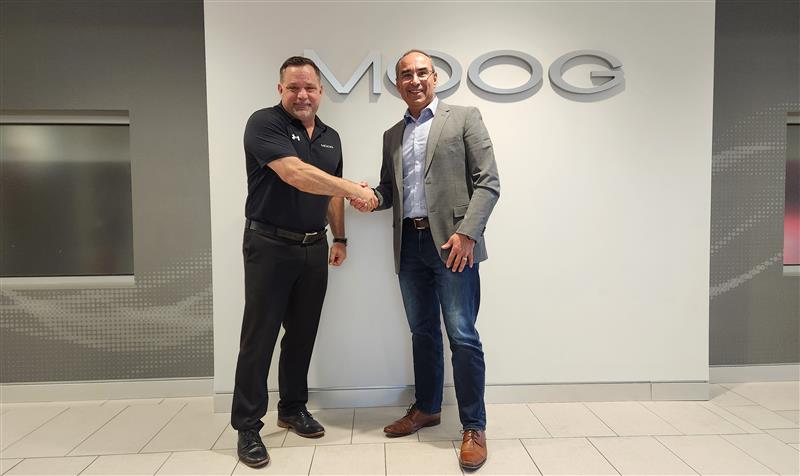
Niagara, ON (November 7, 2023) — Accipiter Radar Technologies Inc. announced today the formalization of its relationship with Moog Inc. (NYSE: MOG.A and MOG.B), expanding collaborative access to a wide range of sensors and capabilities through the Accipiter® Radar Intelligence Network (RIN) platform into Moog’s Digital Airfield Solutions portfolio. Moog customers will benefit through integration with Accipiter’s sensor agnostic platform, enabling plug-and-play access into Moog’s existing Tarsier® FOD mitigation and pavement monitoring system to a growing catalogue of best-in-class sensors, for surveillance of birds, drones, and the perimeter. As manufacturers from around the world introduce new sensors to the market, Accipiter’s unique platform ensures that Moog has access to these new and exciting products, all through a single integration interface, ensuring continued support and advancement to operators of the world’s most complex airfield environments to optimize their FOD, pavement, wildlife, security, and drone management programs. Guy Berry, Moog Digital Airfield Solutions Business Unit Director said, “We are excited for the opportunity to work with Accipiter Radar within this new agreement. Accipiter and Moog share fundamental values of exceptional customer support and providing world-class, high-performance solutions. The Accipiter integration platform will ensure that we can deliver the best overall systems to our customers, while futureproofing their deployment and investment.” Simon Jerome, Vice President for Sales & Marketing at Accipiter Radar, said “We are delighted to have signed this collaboration agreement with Moog. Accipiter’s Integrated Airport is built upon our core RIN Platform Technology and is designed to bring a multi-sensor, multi-mission, multi-user approach to airport operators. The combination of Moog’s Tarsier® FOD system along with our access to a wide range of all domain awareness sensors, coupled with our advanced real-time and historical/analytical Surveillance-to-Intelligence™ (S2I) tools, provides a scalable and affordable offering for our combined customers.” —END— About Accipiter Radar Technologies Inc. Accipiter Radar is a North American company that develops, sells, and operates high-performance radar and sensor intelligence networks engineered to monitor the environment and characterize the behavior of targets such as small vessels, low flying aircraft, drones, birds, people, and vehicles, as well as distributed phenomenon such as weather, ice. The result is enhanced wide-area safety and security through unprecedented domain awareness for 21st century applications in homeland security, aviation safety and security, public safety, and environmental protection. Accipiter Radar Technologies Inc. of Niagara, Ontario Canada and Accipiter Radar Corporation of Niagara, New York, USA are Targeting a Safer World® and have won business from all levels of government in North America, as well as major corporations and governments in various parts of the world. Additional information about the company can be found at www.accipiterradar.com About Moog Inc. Moog Inc. is a worldwide designer, manufacturer, and integrator of precision control components and systems. Moog’s high-performance systems control military and commercial aircraft, satellites, and space vehicles, launch vehicles, missiles, automated industrial machinery, marine and medical equipment. Additional information about the company can be found at www.moog.com. For more information on Moog’s Digital Airfield Solutions, visit https://www.moog.com/markets/aircraft/tarsierfod.html. For more information visit www.accipiterradar.com Or Contact: Simon Jerome, VP Sales & Marketing Accipiter Radar info@accipiterradar.com PDF Download